First, let me start out by saying that I receive absolutely no kickback from these "promotions". These are my every-day tools. If you see something you like, you can just click on it and it'll link you to a site where you can purchase them. These products are by no means the end-all-be-all to be an artist, they're just my personal recommendations. If you have a tool that's been an essential to you, I'd love to hear about it! If I end up liking something enough to put it on this list, you'll be credited for it.
Pencils and graphite

Prismacolor Non-photo Blue Pencil
The newest pencil in my arsenal, this thing is just great, especially for comic work. All of my underdrawings and rough finals are done with this. Once that's done, I'll go in with even tighter hb pencils for my final drawing. Why blue? Well traditionally, instead of scanning an image, they would take pictures of an image, and the blue lines wouldn't show up. Nowadays one can take an image into photoshop and pull the blues out in a matter of seconds.
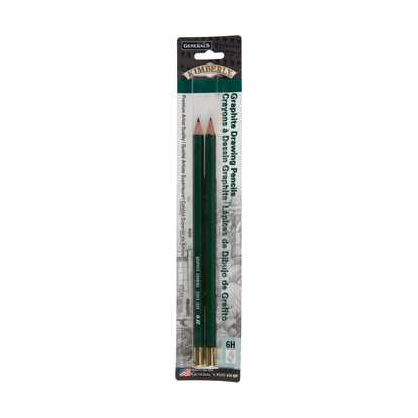
General's Kimberly 6h
For those of you new to art, pencils come in many different flavors. Your typical #2 pencil is an HB pencil. A 6H pencil is 6 shades lighter than that. This lead is very light, and very hard. I will often use this for underdrawings.

Pacific ark 2mm Lead Holder
Really, any lead holder will do, this just happens to be the one I have. I like this more than a standard 0.5 or 0.7 mechanical pencil, because when the lead wears down, it forces me to sharpen it if I want to continue drawing fine details. If I need a wider line, I can just let the lead wear down on its own.

Staedtler Mars Carbon 2mm Hb Lead
This is the lead I use in my Lead Holder from above. There are a lot of companies that make different shades of lead, and even colors. These work just fine for me.

Pacific Arc Lead Pointer
Golly willikers, Mr. Kinsey, now that I have all these fancy leads and holders, how do I sharpen them? Glad you asked, buckaroo. This thing. I'll grind my lead to a nice, sharp point, blow off some of the excess graphite powder, then give it a final dip into that white part, which I can only assume is called the Lead Cleaner, given how complex the name for this thing is.

pentel Graphgear 500 0.3mm
In the event that drawing grinding down a 2mm stump of lead becomes too tiresome, or I just want a different feel, I go with this. Since it's a 0.3mm lead, it's harder to come by a just any store, but it's been great for busting out tiny details. I really enjoy the grip on this; and it's heavier than most mechanical pencils, so it feels sturdy whilst holding you delicate leads.

Pacific Arc Hi-Polymer Refill Leads - 0.3 mm
This is the lead I use in my Graphgear from above. There are a lot of companies that make different shades of lead, and even colors. These work just fine for me. The link I've included takes you to a value pack. If you're lucky enough to have an art supply store near you, you may be able to buy an individual one. (Sorry for the copy&paste, but really, what more can I tell you about sticks of graphite as thin as your hair?)

Prismacolor White Colored Pencil
This is more of a rarity for me to use, but I figured I'd include it for the sake of including it. I'll only use this on works that I've colored traditionally in some form or another. It's great for highlights or lightening up a color that's maybe a little too dark. Be careful with this, though. The lead is a little waxy, which repels a lot of ink. The link I've included takes you to a value pack. If you're lucky enough to have an art supply store near you, you may be able to buy an individual one.

Prismacolor Premier Colored Pencils - 150 Count
This is a luxury item, for sure. There are 150 color here, and that's really about as many as you can ask for. If you're a master at blending, you can probably get away with 9 or 10 pencils at most, but if you're a noob at it, this is the best set you can get.

Prismacolor Col-Erase Erasable Colored Pencil, 24-Count
These puppies are fun to have. They're bright and vibrant, not unlike their Premier counterparts, but they offer a sturdier lead than the others. They also offer the unique advantage of having BUILT-IN ERASERS like a regular pencil! This probably isn't nearly as exciting as I'm making it out to be, but I'm a glutton for a good pencil. Sue me.

Prismacolor Premier Pencil Sharpener
When I'm using Prismacolor Premier pencils, I like to keep the tips shorter because the wax inside is so soft, that keeping at a long point only serves to break it quicker. Those pencils are expensive; short tips = long life. This sharpener also offers a longer pointed option which I find is great for the Col-Erase series.

Menards Carpenter Pencil
Here's one that you probably didn't think you would see on here. My sister's boyfriend gave me one of these, and just figured I'd be able to find a use for it. How right he was. After sharpening this I've found a few pretty great uses for it. One, I found that it's great for making boxes for comics. Another great use is using it at an angle, I can do some calligraphy...IN GRAPHITE. Another use I found was an accident. I sharpened it incorrectly and the lead didn't touch the paper correctly. It created uncontrollable random-width lines. I use this for tree and rock textures and thick liquid splatter.
Erasers

Prismacolor Art Gum Eraser
This is probably my go-to eraser. It's made out of a soft rubber. It erases graphite with ease, with little sacrifice to your inks.

Faber-Castell Kneaded Eraser
Kneaded erasers are great. They only lift graphite, not ink, they lighten your linework without destroying it, you can change their shape, and they're self-cleaning.

Pentel Hi-Polymer Eraser
This eraser is another go-to for me. It's tough as nails because it's made of a soft plastic. It has no problem erasing the darkest lines, but beware, it can lift ink without an issue. With great power, comes great responsibility.

Nayana Co. Moo eraser
This is a new one for me, but I must say I like it a lot. The Moo Erase is made out of a soft PVC. It's like a marriage between a plastic eraser and a kneaded eraser. It lifts graphite heavily, but if you dab it on your pencilwork, it lifts like a kneaded eraser. It also has an added quality of being very clean. Instead of leaving eraser crumbs everywhere, the crumbs roll into a strip for easy cleanup.

Paper Mate Pink Pearl
If this doesn't bring back haunting memories of grade school, I don't know what will. But let's put that aside for now and focus on the positives. This thing has been in production for longer than most of us have been alive, and for good reason. It's tough enough to pick up light amounts of inks. This thing is the school bully, and the graphite on your paper has lunch money.

General's Factis Bm2
I originally received this when I was about 12 or 13. Back then, this was the Paper Mate Tuff Stuff. I don't know what happened, but General's now sells them. I don't care who sells them, they're great. The eraser seems to be made of vinyl or plastic, and is not dissimilar to the Pentel Hi-Polymer eraser. However, the eraser is only about 3/16" thick, so it work AMAZINGLY when erasing those tiny details. When it runs out of eraser, buy some refills.

Faber-Castel Eraser Pencil 7056
Never lacking in fine details means there's never enough eraser pens/pencils. This one's a little different than the last. This is essentially a pencil version of the Pink Pearl. Be careful when sharpening this, if your point is too fine, it becomes too flexible and doesn't work as well.
Inks, color, and correctional

Pentel Pocket Brush Pen
Man, I really can't say enough good things about this. It's cheap, it's sturdy, you can get an amazing array of lines, ranging from almost an inch thick to thinner than a hair (literally [I actually put one of my hairs next to my line]). I really could not ink until I owned this. I participated in Inktober 2018 and used this almost every single day, using the prompts to train myself on how to use it. I absolutely dreaded inking and ruining my pencil work, but now I can't wait to ink stuff. Sometimes I won't even finish my pencils because I love finding the details with the inks. The biggest "thank you" to Jake Parker for the recommendation. The only, and I mean only, drawback is that the ink has and ever-so-slightly transparency to it. To combat this, I empty and clean, then refill the cartridges with Platinum Carbon Black Ink (see below).

Pentel Color Brush, size m (pigment ink)
This was the first brush pen I ever bought. After trying to ink a few pieces with it, I realized it just wasn't doing the job because it was so big, but I found great use in that I had a large brush and could ink large patches of black with ease. The inks are dark and and dry quickly. The ink is not alcohol-proof, so dragging a Copic marker over it will cause the ink to smear. The ink is very glossy, which I'm not a fan of, but it's not a deal-breaker for me. I've only used the medium brush, but I'd love to try the fine or extra fine brush tips as well.

Copic Multiliner
Copic Multiliners are an essential. They create unvaried line weight, both thin and thick, which contrasts perfectly with a brush pen. These particular ones are disposable, but I'd love to make the transition over to the SP Series, which are more costly, but are also refillable, and if the nibs happen to bend, break, or wear out, they too can be replaced (update; I got some SP Multiliners - keep scrolling). One thing that these have that the SP Series doesn't is the array of colors they come in. I'd love to get my hands on some gray ones to add shades to my colors.

Copic Multiliner SP
These are the new essential! They feel sturdier than their cheaper predecessor. The ink seems to be of a higher quality, and the nibs don't feel quite as soft. Over all, I think these are the better, and more affordable in the long run, with refillable ink cartridges. My only real complaint is that the thickness stops at 0.7, where the replaceable version goes up to a 1.0, but I think I can look the other way. The link provided leads to the entire set, but you can purchase them individually as well.

Tachikawa Comic Pen Nib Holder (T-40)
This is a dip pen and the best nib holder ever, I swear. It's thick, so your hand doesn't cramp like it does when holding those cheap plastic ones. It has a grip so it doesn't slide around on you. It can hold both wide and thin barrel nibs, which you usually need separate nib holders for each. And most importantly, it comes with a cap! I know it's nothing to be excited about, but this means that you can leave your favorite nib in there!

Hunt 102
So what nib do I use? The Hunt 102 is my absolute favorite. I really don't use any other ones at all. This gives me the best line weight and control. The catch? The Tachikawa is Japanese, and not made to hold American nib sizes. The barrel is just slightly to narrow and wiggles out. The solution? Cut a piece of clear tape in half, length-wise, and wrap it 2-4 times around the bottom of the barrel; this creates just enough friction to hold it in place.

Platinum Carbon Black ink
This ink is what I use with my Pentel Pocket Brush Pen. You can also dip a brush or dip pen in it. The reason I chose this for my brush pen is because it's both water and alcohol proof, so running a Copic Marker over it won't smear the ink, and it won't spread if you use watercolors over it after it dries. It's very dark, with only a mildly glossy finish, and very resistant to lifting when an eraser is used over it. It does take a little longer to dry, so you have to be patient.

Deleter 4 Ink - Black
As far as I'm concerned this is the best ink on the market. It's dark as midnight, and dries extremely quickly with a matte finish. It's very resistant to lifting from an eraser. This ink is also water and alcohol-proof. If I use a dip pen, this is the only ink I'm using. Do not, I repeat, DO NOT use this in a fountain pen, like the two brush pens mentioned above. Some inks, like this one, contain shellac, which causes terrible blockages to your fountain pens.

Deleter 2 ink - White
This stuff is great! Some white inks are not very opaque. This is not one of them. The reason for this is because of its viscous nature. It's about as thick as Elmer's Glue. Because it's so thick, you can really only apply this with a brush, as it's just to thick to flow from a dip pen. There is a workaround that I've found through experimenting. 2 parts Deleter 2 White Ink + 2 parts Dr. Ph. Martin's Bombay White India Ink + 1 part water = an opaque white ink, thin enough to flow from your dip pen. I'm still experimenting to find the best consistency. If you have a better method, I'd love to hear from you on my Contact Page.

Sakura Gelly Roll white gel pen
So the Deleter+Bombay+Water concoction is a little too inconvenient for you? I get it. This is another great solution. Gel Pens were all-the-rage when I was in elementary school, but now I use these white ones as often as not! The ink that flows is very opaque, but it takes a minute or two to dry. What you lose from the previous suggestion is line weight. These are just ball-point pens, so you don't get much of a variance, but if you're okay with that, these are a cheap and efficient solution.

OfficeMax Correctional Tape
Maybe it's cheating, maybe it's not. Some mistakes are too big to cover with a tiny dab of white ink. If you need to rework a small area, cover it with correctional tape, and draw back over it. This stuff was made to cover up mistakes and be rewritten on, so why not use it for art too? Just don't sell the original piece if it's littered with correctional tape!

Copic Markers
Copic Markers scared me for the longest time. I had colored my drawings digitally before, but the thought of coloring a picture with no ability to erase was a nightmare. But I decided to take a leap. With these, I learned how to plan ahead when coloring and I'm a better artist for it. But enough about me, what is it that makes these markers so great? First, there's like, an infinitesimal amount of colors to choose from. Okay, really there's a few hundred, but whatever. Second, you can blend them together to create seamless transitions between colors. There are a few different kinds to choose from as well, some more expensive than others. You can also buy refills for them, which cost about as much as a single marker, but you can refill your empty ones 7-15 times! The nibs are also customizable to an extent as well. These things are great! The real downside here is the cost. If you buy them at an art supply store, they're going to run you $6-$8 per marker. Use coupons if you can!

Artist's Loft Sketch Markers
So you you're a little wary about buying an $8 marker, I get it. These things are a Michael's exclusive generic version of a Copic Sketch marker. Yeah, sometimes I buy knock-off stuff; I have no shame. These are honestly pretty good for being half the price of a Copic. Currently there's only 56 colors to choose from, but really that's more than enough as far as I'm concerned. There are a few drawbacks here, though. The markers, as far as I know, can't be refilled. Also the brush tip isn't as smooth as a Copic's. Honestly, these are a hidden gem that not many people know about.
Paper and sketchbooks

Extra Large Moleskine Cahier Journal, plain
These things are not the most amazing sketch books in the world. The paper isn't the thickest or the brightest. The cover isn't very rigid. There isn't any fancy features. And that's exactly why they work. This was another suggestion by Jake Parker, and I'm really glad I listened. I have had much nicer sketch books, and because they were nice, I felt that every page was precious to me and that just doodling on a page was a waste of precious space and money. I always keep one of these because it doesn't feel super valuable to me and I don't feel bad with ruining a page or two with a bad drawing. One upside to this is the slim profile of it makes it very easy to travel with.
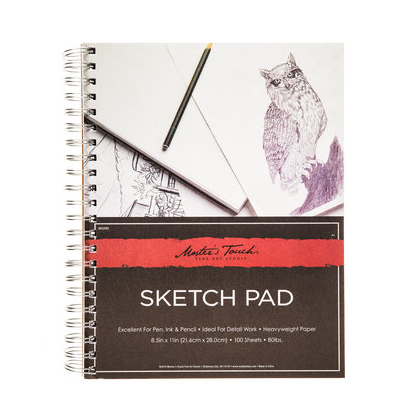
Master's Touch Sketch Pad, 80lb
Here's the much nicer sketch book I previously referred to. I still use this, especially when working on personal projects. The paper is very high-quality, is very bright, and has the perfect amount of texture to it, which lets me draw fine details with ease. The paper is also pretty thick, so it doesn't feel like it will fall apart so easily. I also like being able to flip the pages to the back if I want because of the metal spiral. The spiral does have its drawbacks though, as it makes getting a good scan much harder than it needs to.

Hammermill Premium Color Copy Cover 80lb Paper
Like the Master's Touch Sketch Pad, this is also a thick 80 lb paper, but it's got a much smoother finish. This isn't your average copy paper, which is usually not as bright, and only a quarter of the thickness of this paper. It's made to run through your printer, so you shouldn't have any issues with jams.

Strathmore 200 Series blue lined bristol board
This is the stuff you need if you're going to be a traditional sequential artist. It's very thick and very smooth. As an added bonus, it comes with pre-made blue lines showing where to (and where to not) put your artwork to keep it from getting cropped off by a comic printer. If you print on it by yourself, be warned - not all printers are made equally. If you don't have a good printer, this paper will cause a jam. It's probably worth noting that this isn't your average-sized paper. It's A3, meaning it's 11"x17"
Hardware and Software

Brother MFC-J6930DW All-in-One Color Inkjet Printer
This thing is a powerhouse and is involve in every piece of art I make in one way or another. It's made for office use, but it works just fine for an artist, too. It has a much bigger scanner than your every-day printer/scanner combo. It can print, copy, scan, and fax documents up to A3 size (11"x17"). It has no issue printing on thick paper like bristol board, and can scan in at 1200 dpi. For those of you who are a little less than tech-savvy, that means you can scan, and subsequently print, very high-quality artwork. The ink cartridges for this thing are very costly, but if you go with a knockoff brand, it'll keep your bank happy. If you're looking to shop for even cheaper ones, go to a search engine and type in "LC3017 Compatible Ink," and you'll be off to a good start.

Wacom Cintiq 22HD 21-Inch Pen Display Tablet
This is another one I got off of a recommendation from a friend and mentor, Lori Barker, who inks the Garfield comic strip. If digital art is the name oft the game, Wacom are the reigning champions. The Cintiq has been the industry standard for a long time, and for good reason. These things are amazing. The display is huge and so delicately responsive to the stylus. It' has 16 customizable macro buttons and 2 slider ribbons, which are also customizable. This thing isn't even remotely cheap, I'm sorry to say. But it'll pay itself off 10 times over. I used a Wacom Bamboo Tablet for a long time, but I don't think I could ever go back.

Adobe Photoshop CS6
Photoshop was introduced to me about 12 years ago when I was a teenager, and I fell in love with it. I've used it consistently ever since, and I've got to confess, as a self-taught photoshopper, I still learn new things about this program all the time. This program is so immense and powerful that I still don't claim to have it mastered after all this time. I can't suggest it enough for people who want an easy way to ink or color their comics.

Adobe Illustrator CS6
Illustrator is another powerful tool by Adobe. This program is a lot less intuitive, but just as rewarding. Where Photoshop creates files as bitmap or raster images (meaning they're composed of tiny pixels), Illustrator creates files as vector images. What is a vector image? A vector, as I understand it, is a shape created through mathematical equations. So what's the difference? If you were to take a raster image of a circle drawn at 100 x 100 pixels and expanded it to 1000 x 1000 dpi (dots per inch), you would see a huge loss of quality. The edge of the circle would be grainy and pixelated. Suppose you do the same thing with a vector image. Because it's not composed of pixels, there would be no loss of clarity, because the mathematical equation has been adjusted to make the circle bigger. Because the images don't lose clarity, I use this a lot in graphic design so I can size the logo to my client's needs without sacrificing quality.
© 2022 Casey Kinsey